

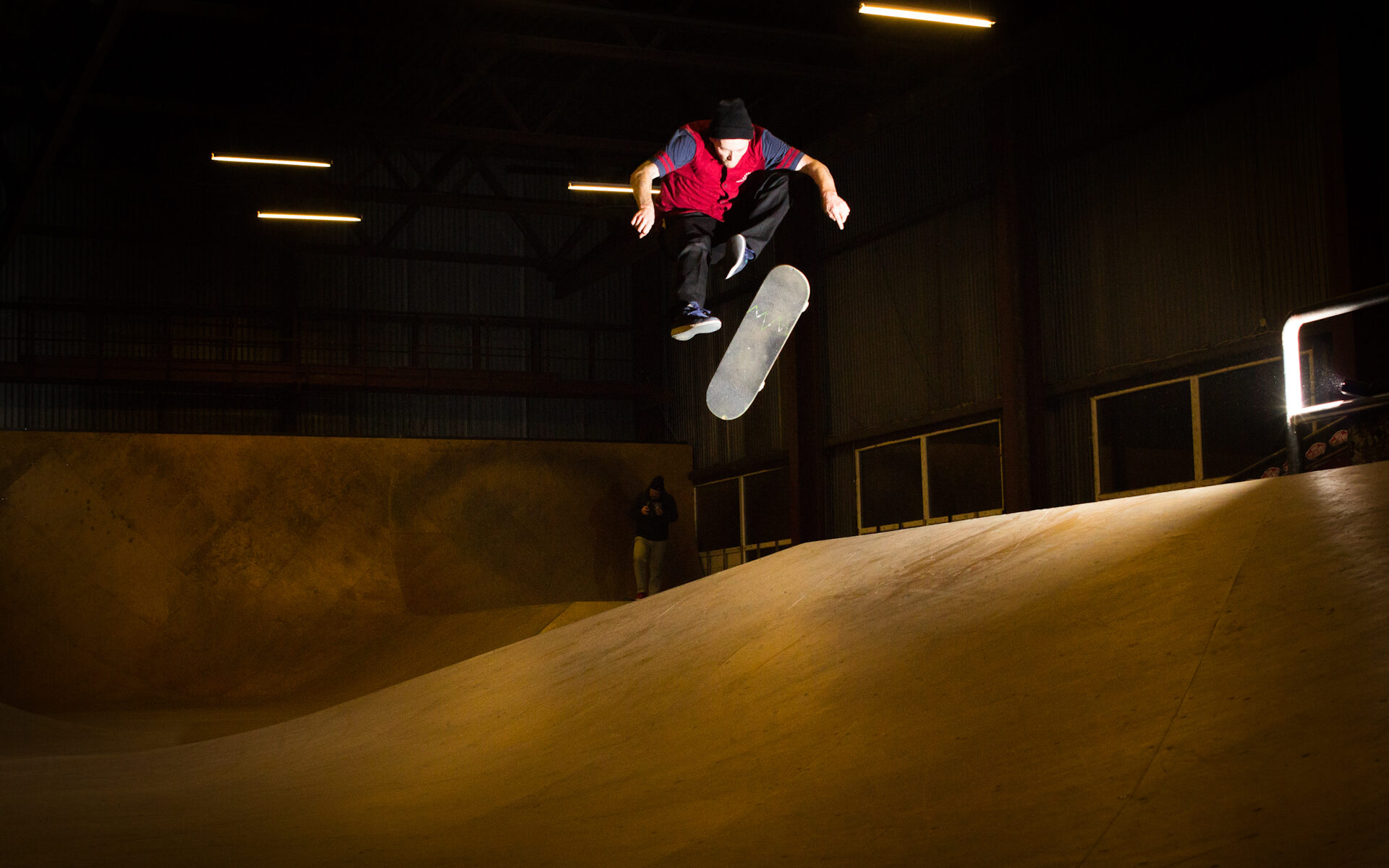
Love them or hate them, indoor parks, especially in our geographical area, play a big role in progression and skaters’ development. Now, with SPOT’s main street park closing for relocation and renovation, most indoor alternatives, including ISO and Gtiims, lean toward similar low-impact setups: box, corner, quarter, flat. As of now, it looks like the next generation of Riga rippers will get less exposure to bigger obstacles in indoor parks, and this might potentially slow things down in the gnarly department.
Riga’s indoor parks of the past used to be a little bigger and raised skaters who could skate more intimidating obstacles. In Monster Parks and VEF, you had to drop into tall quarters, go fast, and pop off steep banks. The obstacles included handrails, and waist-high ledges.
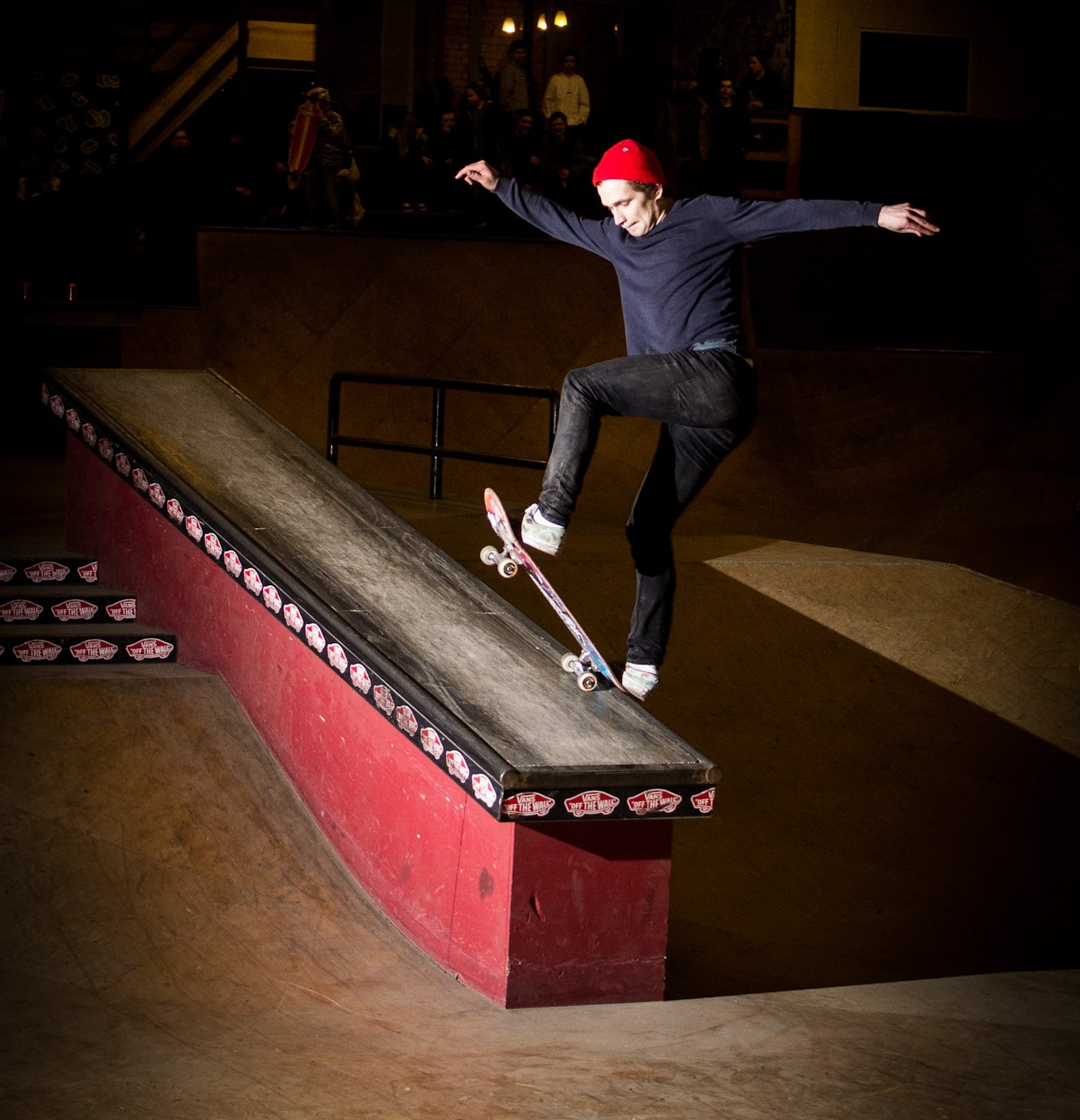
Of course whether something is big is subjective, but those parks were not places you’d go to just session a box. However, despite that, VEF and Monster were the places where progression peaked, and talents could evolve. Toms Bika’s last VEF video captures that time perfectly, and the output from Clockwise Skateshop during the VEF time shows how rapidly everyone progressed. Tricks like Eduards Nehajenko’s kickflip fs 5-0 and Maksims Feofilovs’ switch flip front board down the main VEF rail are top shelf and would not have happened if there had been no VEF.
“I think VEF definitely was a place where my skills grew, and later it opened more options in the streets,” Eduards recalls about his time skating VEF. As a VEF alumnus, Eduards could skate gnarlier street spots: “For example, I wouldn’t have skated some of the handrails that I did if it wasn’t for VEF.”
In the aftermath of both VEF and Monster closing, we got the more democratic and approachable The Spot Centre. The space was split between the “street” section, with flat space, kickers, and boxes on one side, and the “park” section with rails on the other. The flatground area was a progressive idea at the time and felt perfect for low-impact skaters and beginners. The bigger section became more approachable too, and therefore visually less intimidating. The main rail was not only roughly half the length of the original Monster rail, but also had a bump leading into it that made it easier to get on.
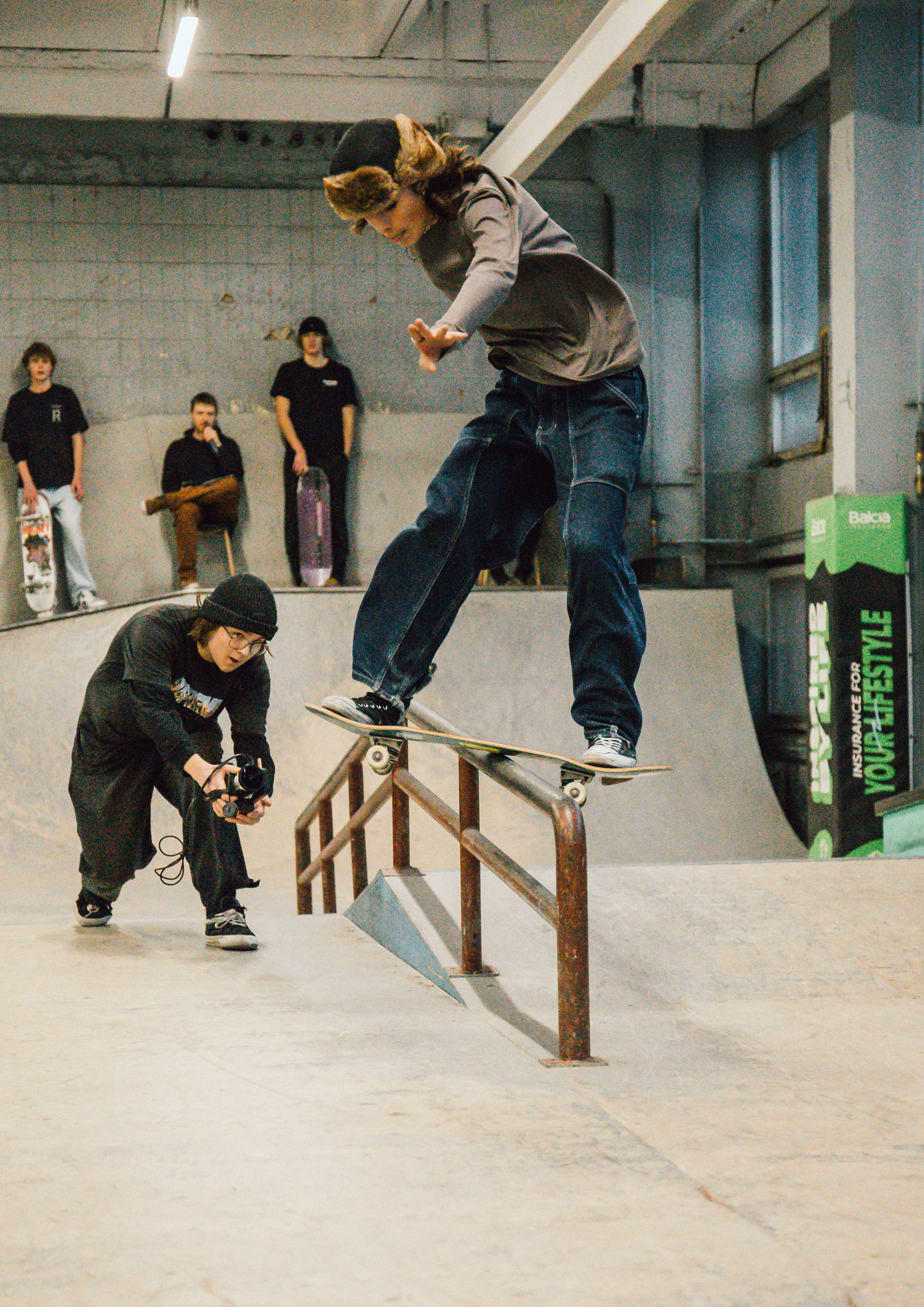
“It was so easy to take my trick to the bigger rail over there … I could take a new trick from the flatbar to the big rail in two weeks,” The Spot regular Kurts Sakars (16) comments. “Spot basically had everything I needed to progress… later in summer I would do the tricks I learned in Spot in the streets.”
On May 6, it was announced in an Instagram post that The Spot Centre street section is closing after serving the community for eight years. Einars Lansmanis, the director of The Spot Centre, commented: “As a result of several coinciding circumstances, the ‘The Spot’ street area is being moved to the first floor, making the center more compact. This is a strategic step that will create new opportunities for development and the realization of new ideas in the long term.”
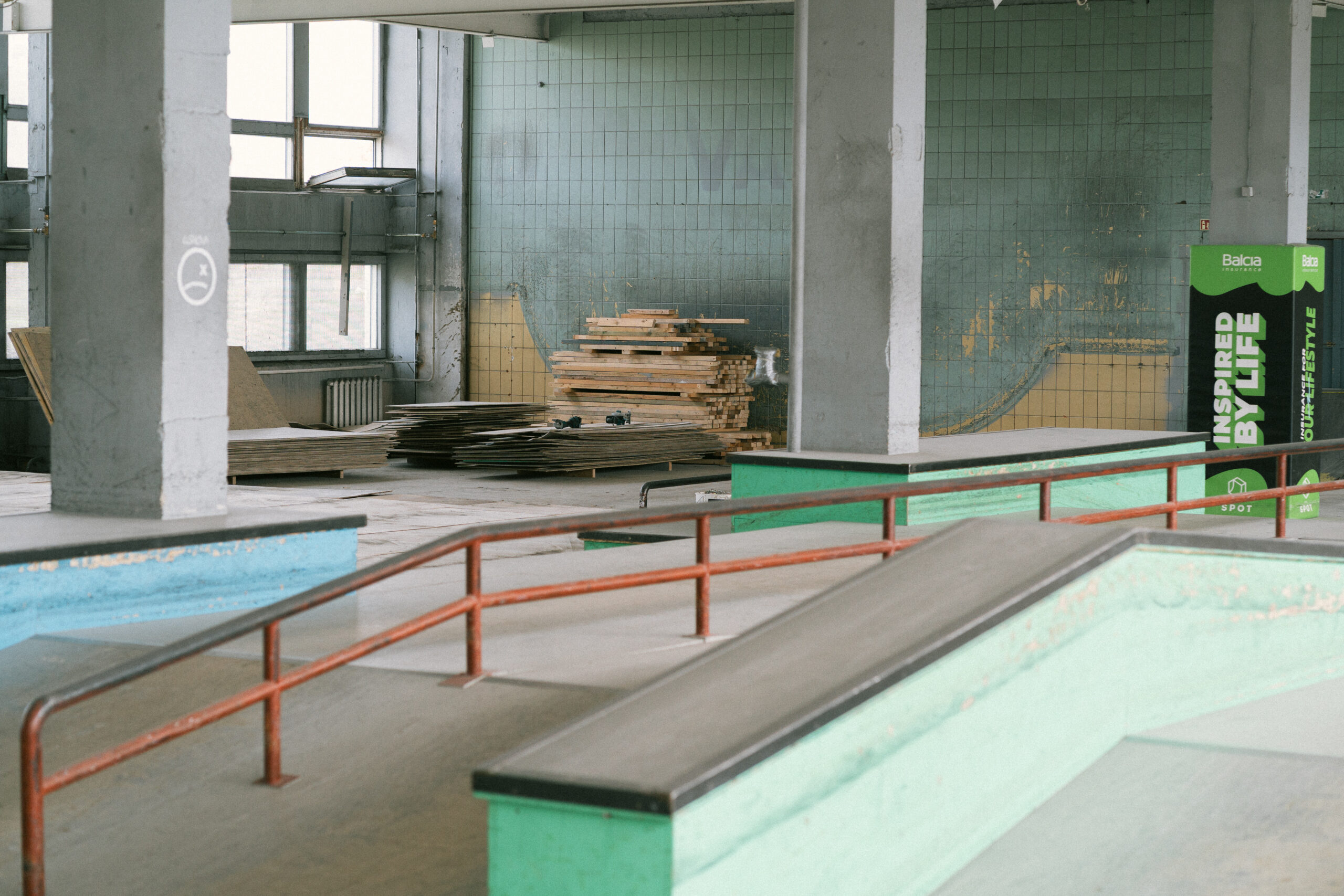
The Spot will stay, but will the new design provide the same opportunities for handrail-hungry skaters like Kurts? Regarding the design ideas, Einars had this to say: “There will be a flatground area with various obstacles. The exact plan is not finalized yet, and there is no deadline yet either.”
Some of the reasons for making the space more flatground-oriented are clear. Mind Work Ramps (MWR) co-founder Martiņš Sleja, who worked on the design of the now-demolished Spot street section, had this to say about modern designs: “The idea is to make sure that younger or less experienced people who want to use the skatepark wouldn’t feel intimidated. You can see a similar pattern across Europe as well, because in the end, what matters is that a skatepark is a great training space both for beginners and experienced skaters.”
Sleja also mentioned the dimensions of the space as being an important factor in design approach: “If a park is 600 m², the focus will naturally lean more toward low- to mid-level skating. If a park is 1500 m², then you can start designing zones for a much wider range of skill levels, like in Tartu, for example.”
On one hand, the more users the better, not only for places like The Spot to stay afloat, but also to keep skateboarders and other scenes alive. On the other hand, lack of exposure to bigger obstacles can slow progression in one of the more exciting sides of skateboarding. Not everyone is a tech ledge skater, and not everyone is excited to skate curbs and flat all day either. Of course, ideally all those needs should be combined in one place.
Our southern neighbours, however, may have found a compromise worth looking at. Lithuanian Skateboarding Federation’s Skate HUB Vilnius, despite being roughly 500 m², houses both advanced and beginner zones. “The smaller space is strictly oriented toward beginners with static small obstacles… our bigger space (LTRF skate park) also has a mix of obstacles which are accessible and suitable both for beginners and advanced skaters,” noted Justinas Ivoška, the president of the Lithuanian Skateboarding Federation. “In the smaller space (Core Indoor Vilnius skate school park) we even have cable attachments for learning transition and flatground tricks.”
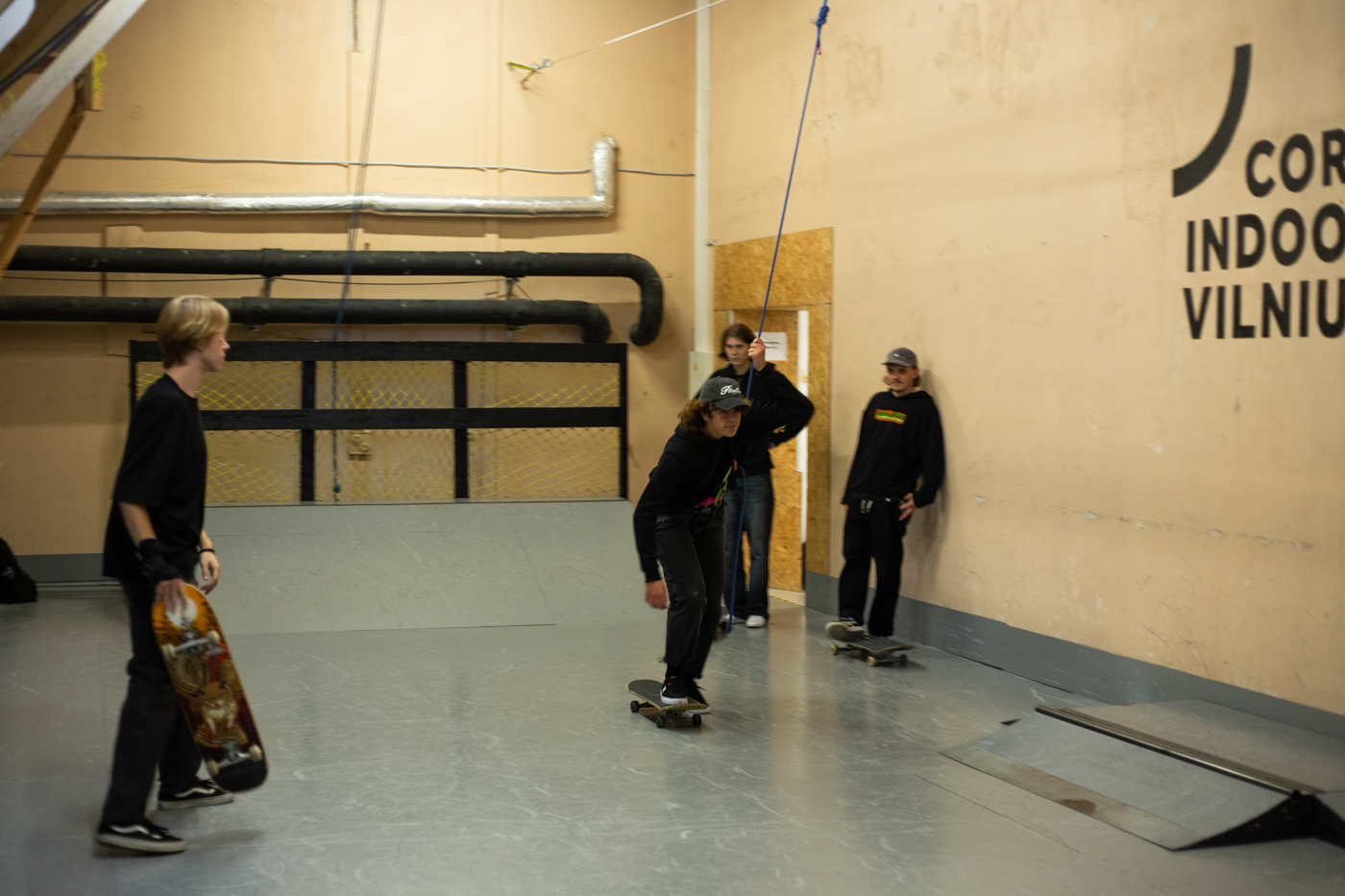
The Lithuanian Skateboarding Federation trains skaters for competitions, so the big obstacles are a must. “We have a few guys who prepare for national competitions, so we need similar obstacles, or very relevant ones, to what we have in big skateparks where competitions are happening.” Despite that, the park is still used by skaters of all levels. “On occasions when the LTRF skate park (bigger space) is not that packed with advanced skaters, beginners can find obstacles for them to skate too.”
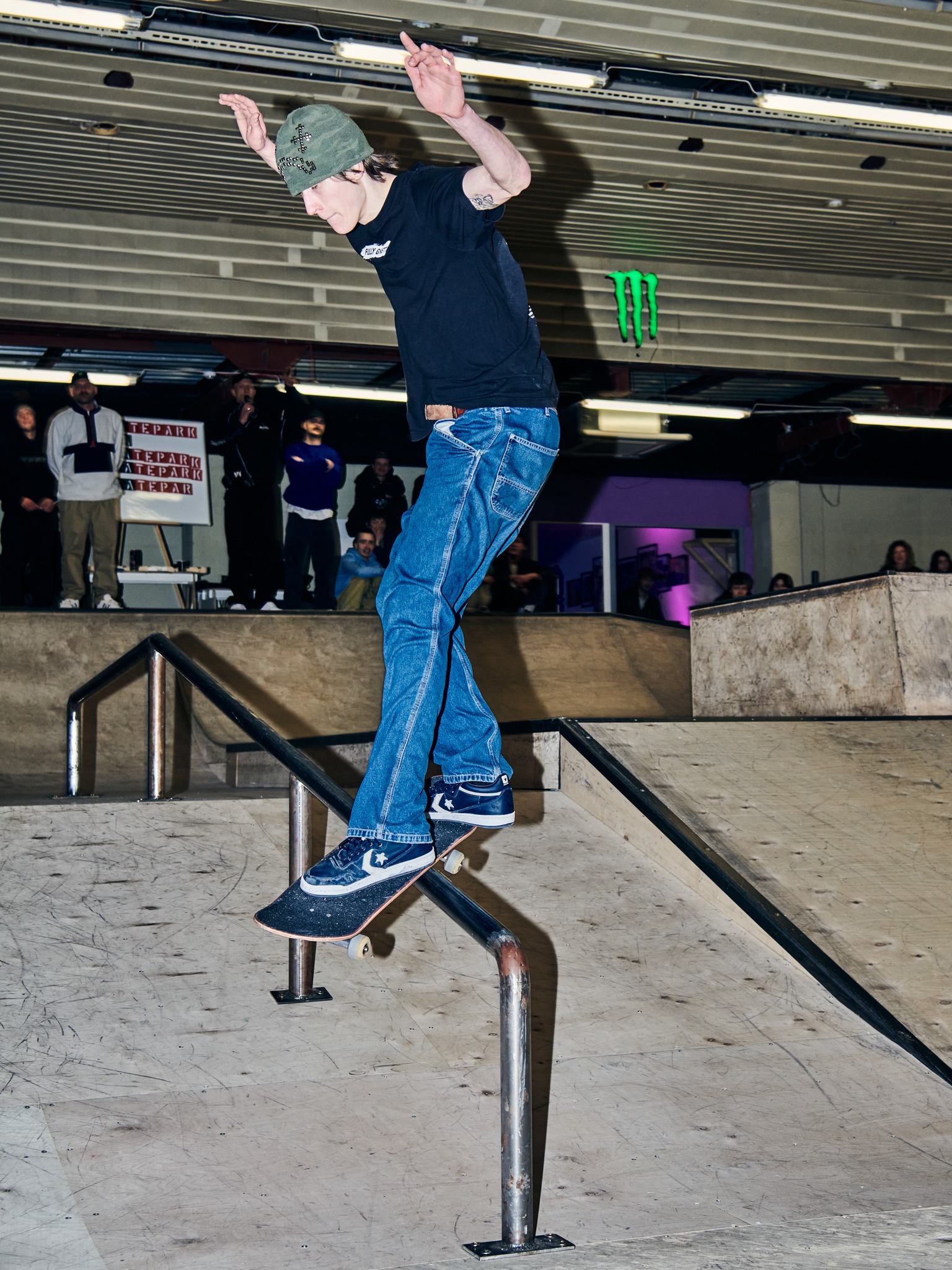
Should we worry about new riders so much that we strip parks of anything intimidating and dangerous? Should we save money on bigger obstacles that only two kids will skate? Probably parks should include a little bit of everything, so the kids who want to rip get a chance to try.
As of now, we will have to wait and see what the new Spot will look like. But it is definitely the end of an era that kids like Kurts will reminisce about: “So sad they demolished it, I just hope they won’t throw the rails away in the new park and won’t make it into a Gtiim 2.0 or something.”
Spot was empty a lot of the time while the bouldering gym above is always packed. From an economic standpoint, it didn’t make sense to have such an advanced indoor park where the demand is very low.
At the same time, skate school participants and the inline skaters are bringing a lot interest and thus income. For me as an older skateboarder (36), lower level obstacles are also preferred because I cannot lose the ability to work due to trauma from gnarly obstacles. It is what it is. There are plenty parks outside to practice advanced stuff in the season whereas beginner-friendly indoor will be what keeps the momentum and progression – at least that’s how it is for me.